PC demand and the DRAM consumption amount will not be easily stimulated by Windows 7
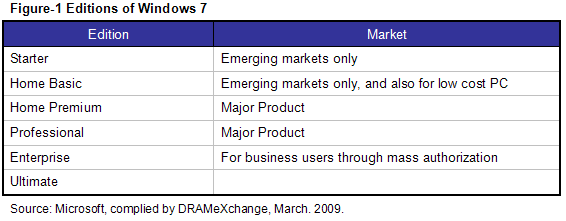
After Windows Vista, Microsoft plans to launch its new operating system Windows 7 with six editions (Figure-1) to meet different market segment demand at the end of 3Q09. Inheriting most of the functions of Windows Vista, Windows 7 can be viewed as the improved version of Windows Vista and revised the commonly complained shortcomings of Vista. Meanwhile, the system requirement of Windows 7 is quite similar to the requirement of Windows Vista in order to avoid the promoting limitation which occurred to Windows Vista.
The PC buying stimulation of Windows 7 is limited
As far as commercial market is concerned, the Windows 7 is merely possible to stimulate PC buying of 2009 with the following reasons: 1. the Corporate IT expenditure cut. 2. Due to system stability, it usually takes a year for the new operating system to be induced.
About the consumer market, Windows 7 is planned to launch between 3Q and 4Q of 2009, which already missed the back to school hot season. According to the testing result of Windows 7 Beta version, the function and performance both has improved from Windows Vista. The 3Q end launch will whether delay the purchase or suppress the 3Q sales is needed to be evaluated by the vendor.
The key of DRAM price reviving is still on the supply side
The current CPU, memory, and HDD requirements of Windows 7 are 1GHz, 512 GB to 1 GB, and 40 GB. The current entry level PC equipped with 1.2 GHz to 1.6 GHz CPU, or even the Atom platform Netbook/ Nettop CPU 1.6 GHz, memory density started from 1 GB and 2 GB now is becoming standard, and the 160 GB HDD capacity, is already qualified with the Windows 7 requirement and won’t become an obstacle of operating system transition.
In regular situation, the PC specs only become better and better. The chances for new operating system to reduce DRAM density are low, but what is sure is the new operating system will not drive the DRAM content per system. Under the circumstances of unstable PC demand in 2009, whether the DRAM price will go up again or not still depends on how the DRAM vendors adjust their capacity and the OEM customers’ attitude toward increasing DRAM content per system.

The memory market watcher
DRAMeXchange is a global primary provider of future intelligences, in-depth analysis reports and advisory services on DRAM and Flash memory industry with coverage including current business, spot trading prices, and market trends, capital spending and wafer capacity trends, the impact of DRAM/flash memory products on the market, and other relevant PC industry information.
© DRAMeXchange ® Tech.Inc. All rights reserved.